+ 5k
waste pickers empowered, gaining access to social benefits across 25 cities
Last update: 08/08/2025
Transforming Argentinian Waste Collection and Management Systems by Empowering the Main Stakeholders
| country | Argentina |
|---|---|
| theme | Inclusive Plastic Collection |
| status | On-going |
| Implementation Date |
2011
To date
|
| Budget |
5M€
|
| Phase | 4 |

Project
Learn everything about the project
Metrics
The effects of our project
Humans of Ecosystem Voices
The people working behind the scenes
Knowledge
How our project relates to our missions
Partners
Those that help us be successful
Supported SDG’s
Sustainable Development Goals
Coordinator
Danone Ecosystem team
In Argentina, the recycling industry is characterized by an informal economy and low productivity. Urban collectors, often working under inadequate conditions and for low financial return, gather recyclable materials. Some work individually while others have organized into cooperatives. Paperboard is the main recycled material, with plastic (PET) collected in lower quantities.
Despite their crucial role in the recycling process, urban collectors face a range of intertwined environmental, economic, and social challenges. These include a lack of technical knowledge, low productivity, poor working conditions, and limited market access. Additionally, the informal nature of their work often results in unstable income and inadequate social security.
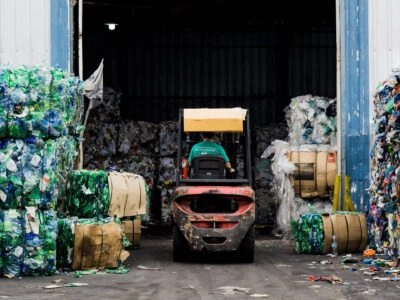
The Cartoneros project was co-created with several partners to build an inclusive recycling model that improves the living and working conditions of urban waste pickers in Argentina. Since its launch in 2011, the project has supported the professionalization of cooperatives and strengthened the local recycling ecosystem across multiple cities.
After empowering over 3,400 collectors through Phases 1 to 3 (2011–2023), the project entered a new phase in 2023. Supported by Danone Ecosystem, Fundación Avina, Latitud R, Danone Argentina and the Inter-American Foundation, this current phase focuses on scaling impact by reinforcing the organizational capacity of cooperatives, improving material recovery infrastructure, and supporting policy advocacy for inclusive recycling.
The program provides cooperatives with equipment, technical assistance, and training in both management and life skills. It also works with large waste generators to support source segregation and responsible disposal. By improving safety conditions and enabling direct connections between cooperatives and recyclers, the project contributes to more secure livelihoods and fairer market participation for waste pickers.
In parallel, awareness campaigns aim to increase recognition of the environmental and social value of this work and foster better waste sorting habits among citizens.
Omar
Recycling
Published on 09/06/2026
How to transform recycling systems by empowering waste-pickers and waste cooperatives

Senior LATAM Project Coordinator
Cristina is Senior Coordinator for Latin America at Danone Ecosystem. Before joining the team, she worked on designing and coordinating sustainability business projects across the region, with a particular focus on regenerative agriculture.