876
Physical educators trained
Last update: 09/06/2015
Preserving elderly people’s autonomy in France
| theme | Ageing Care |
|---|---|
| country | France |
| status | Handed-over |
| Implementation Date |
2011
2015
|
| Budget |
638K
|
People worldwide are living longer, with most individuals now expected to reach their sixties and beyond. This demographic shift is reflected in every country, where both the size and proportion of older populations are steadily increasing. By 2010, the global population aged 60 and over had reached nearly 760 million, and Europe was the region with the second-largest number of older people, with around 161 million.
In this context, population ageing has emerged as a major societal challenge, particularly in countries such as France, where approximately 1 in 7 older adults requires assistance with daily activities, illustrating the scale of this issue. Older populations are increasingly affected by chronic conditions, cognitive decline, and functional impairments, which contribute to a progressive loss of autonomy and rising levels of dependency.
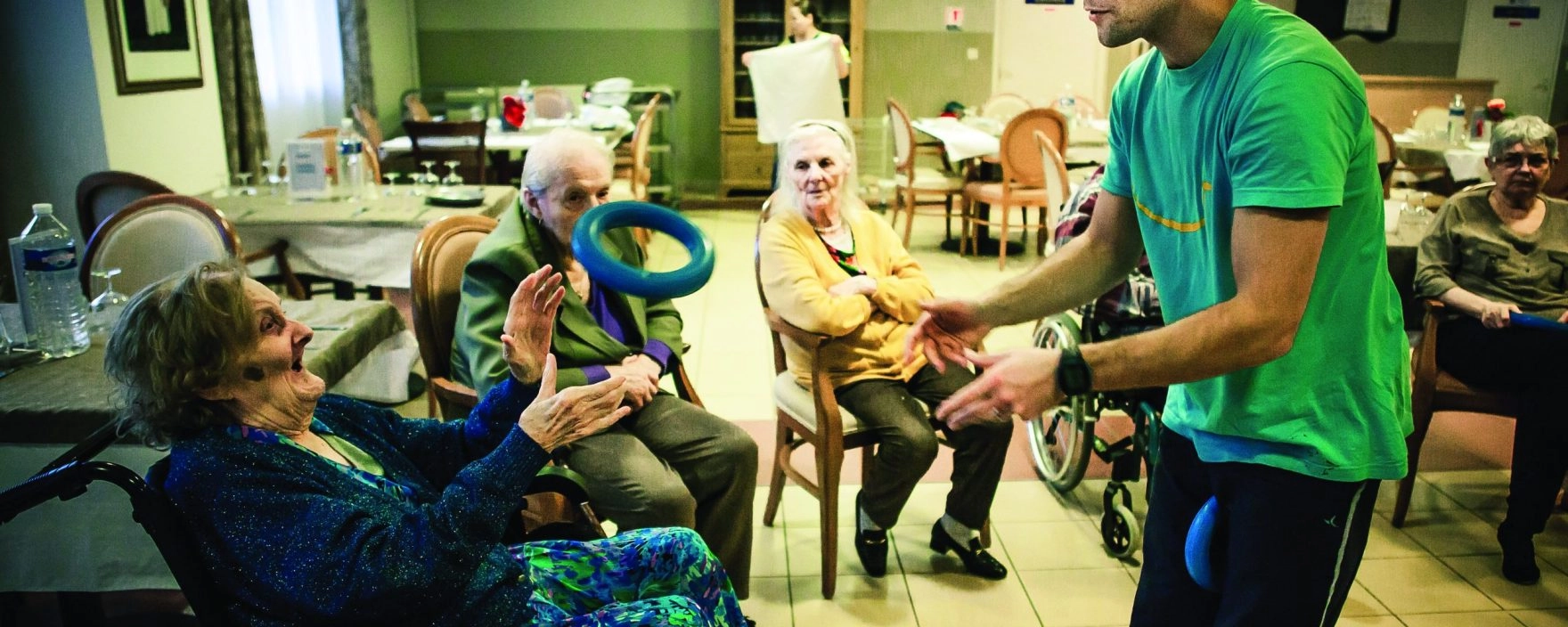
Launched in 2011, the Bien Vieillir program combined individual nutritional advice with physical training to improve older people’s health and well-being. It was offered to retirement home residents at an affordable price by physical educators recruited and trained by the Siel Bleu Association.
The project also created jobs for physical educators working in nursing homes and helped prevent malnutrition and accidents, thereby supporting older people in maintaining their autonomy. In addition, it raised awareness of the specific nutritional needs of elderly adults.
The model was designed to be easily replicable, allowing the program to be scaled up. It has been successfully implemented in Spain and Ireland through the ActiVIDA and Ageing Well projects.
The project later became independent and was officially handed over in 2015.