€ 1.2 M
in funding
Last update: 25/06/2026
Enhancing Smallholder Dairy Resilience in Indonesia
| country | Indonesia |
|---|---|
| status | On-going |
| theme | Regenerative agriculture |
| Implementation Date |
2022
|
| Budget |
1.2M€
|
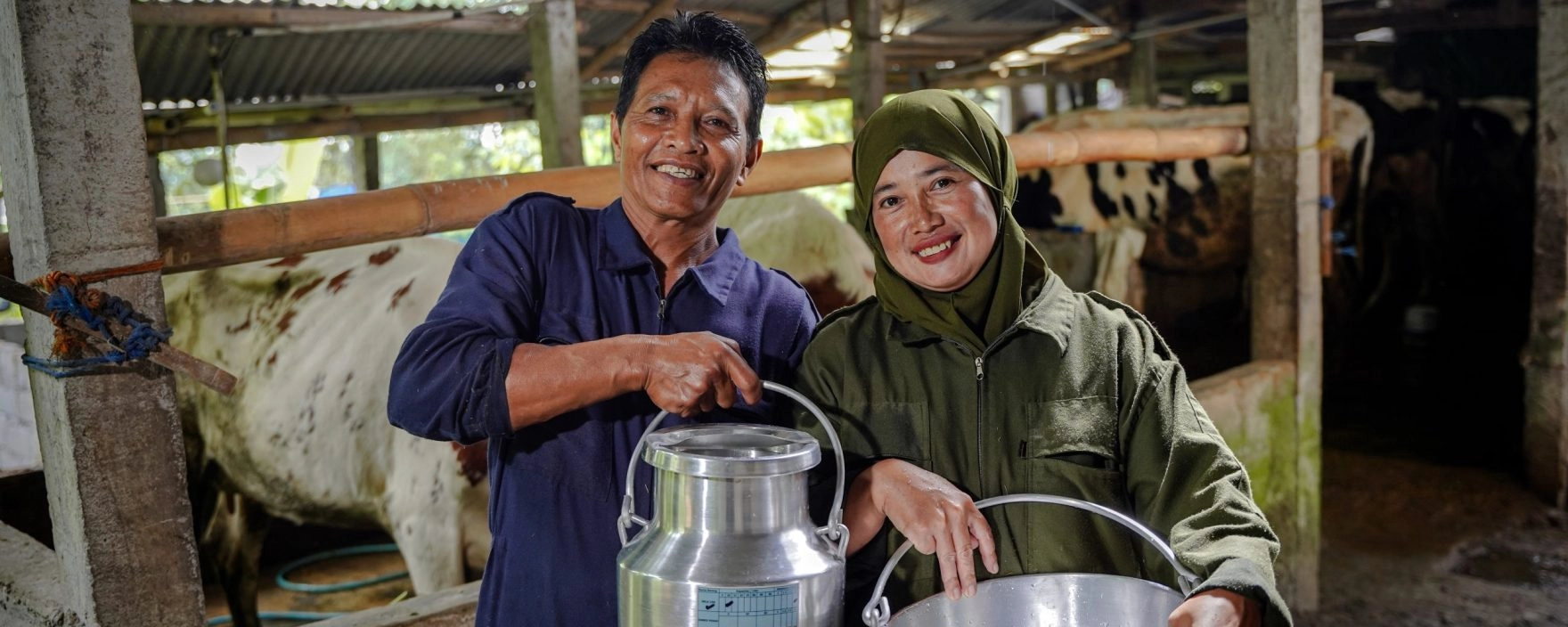
Indonesia produces around 2.6 million liters of milk per day, meeting only 22–23% of national demand. As a result, the country relies heavily on imported milk powder. Local production comes from approximately 584,000 cows, with only 40–50% being productive. The sector is dominated by smallholder farmers, typically owning 2–3 productive cows. According to the Ministry of Agriculture, milk production has declined in recent years, reaching 947,685 tons in 2020.
Local dairy farmers face key challenges, including low productivity and milk quality, limited access to finance and quality inputs, and gaps in technical knowledge and farm management practices.
Thus, to meet the national demand, improve the livelihood of smallholder dairy farmers, and meet the national priority in fighting stunting, the Government of Indonesia (GOI) has set the target for the dairy sector by increasing the dairy cow population, productivity, milk quality, open up access to finance and build partnerships in the industry to enhance food sovereignty.
Launched in 2022, the project aims to strengthen Indonesia’s smallholder dairy sector through a comprehensive and systemic approach, contributing to national food sovereignty and long-term resilience.
To achieve this, the project prioritizes capacity building through targeted training and mentoring across key aspects of dairy farming, including feed management, good milk handling practices, animal health, reproduction and animal welfare.
Building on this foundation, a central pillar of the initiative is the development of “champion farmers”, individuals capable of adopting and disseminating innovative and sustainable practices within their communities. Acting as role models, they help scale good practices across the sector. This approach combines selection and profiling, tailored capacity-building programs, peer-to-peer learning, regular technical support, and monitoring and evaluation. Complementary activities such as farm improvements, feed trials, and veterinary visits further reinforce knowledge transfer and practical adoption.
At the same time, the project helps build a more resilient dairy ecosystem by supporting environmental management, such as technologies that reduce methane emissions and enhance access to water.

Project Coordinator ASIA
Adrian is working with Danone Ecosystem as Project Portfolio Coordinator in Asia, leading key topics of Watershed Protection & Plastic Collection.