€ 3.3M
in funding
Last update: 24/06/2016
Improving French farmers resilience and encouraging sustainable best practices
| country | France |
|---|---|
| theme | Regenerative agriculture |
| status | Terminated |
| Implementation Date |
2011
2016
|
| Budget |
3.3M€
|
When the project was initiated, the medium-term horizon (2015) coincided with a major policy shift: the planned end of the European Union milk quota system under the Common Agricultural Policy (CAP). Introduced in 1984, the EU milk quota system imposed limits on the volume of milk that farmers could produce, with financial penalties applied in case of overproduction, in order to prevent structural surpluses and stabilize prices in the dairy market.
The abolition of these quotas marked a significant structural shift in the regulatory framework of the dairy sector, exposing milk producers to increased competition and greater price volatility, particularly affecting smaller farms.
Launched in 2011 with the support of the Danone Ecosystem Fund, the Horizon 2015 project was co-created by the Institut de l’Élevage and Danone Produits Frais France to improve the resilience of French dairy farmers and better prepare them for major transformations in the dairy sector, particularly the reform of the Common Agricultural Policy (CAP) and the end of milk quotas in 2015.
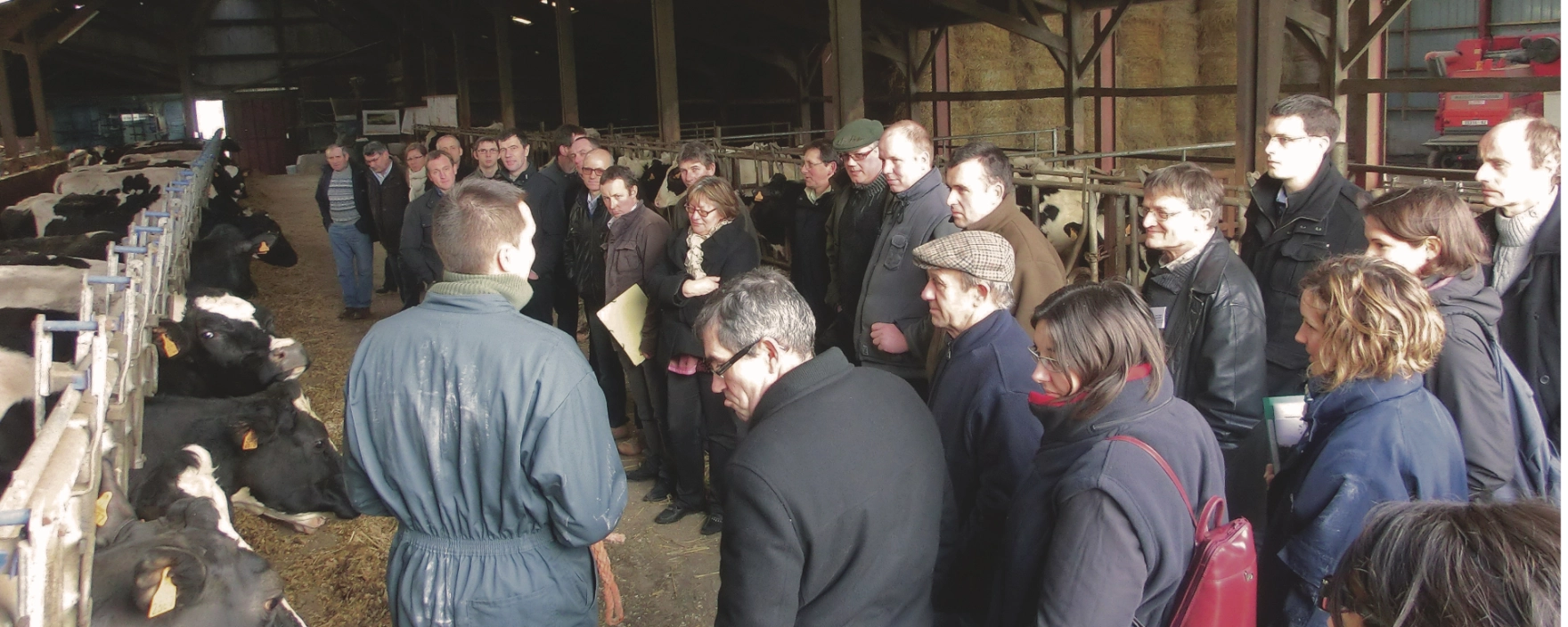
The project supported farms through audit systems and the dissemination of best practices, implemented via advisory and training programs in collaboration with local development organizations, including chambers of agriculture, milk recording bodies, and management centers.
It was initially rolled out as a pilot (Phase 1) in the South-West of France, with a focus on identifying and promoting the most effective sustainable agricultural practices and fostering their adoption. It was then expanded (Phase 2) to four additional regions—Lower Normandy, Upper Normandy, North, and South-East—with the objective of empowering farmers to take ownership of sustainable practices, integrating an environmental dimension alongside the social, resilience focus.
In Phase 3, the project structured a network dedicated to sharing experience and scaling up sustainable knowledge across regions. It also aimed to strengthen collective capabilities and reinforce connections among farms and local stakeholders within the dairy sector.