All projects

Last update: 24/07/2025

Alban Baladna

Empowering Smallholder Dairy Farmers to Improve Rural Livelihoods and Contribute to Egypt Food Security
country Egypt
status Handed-over
theme Regenerative agriculture
Implementation Date
2010 2023
Budget
2,714 M

Tackling Local Challenges

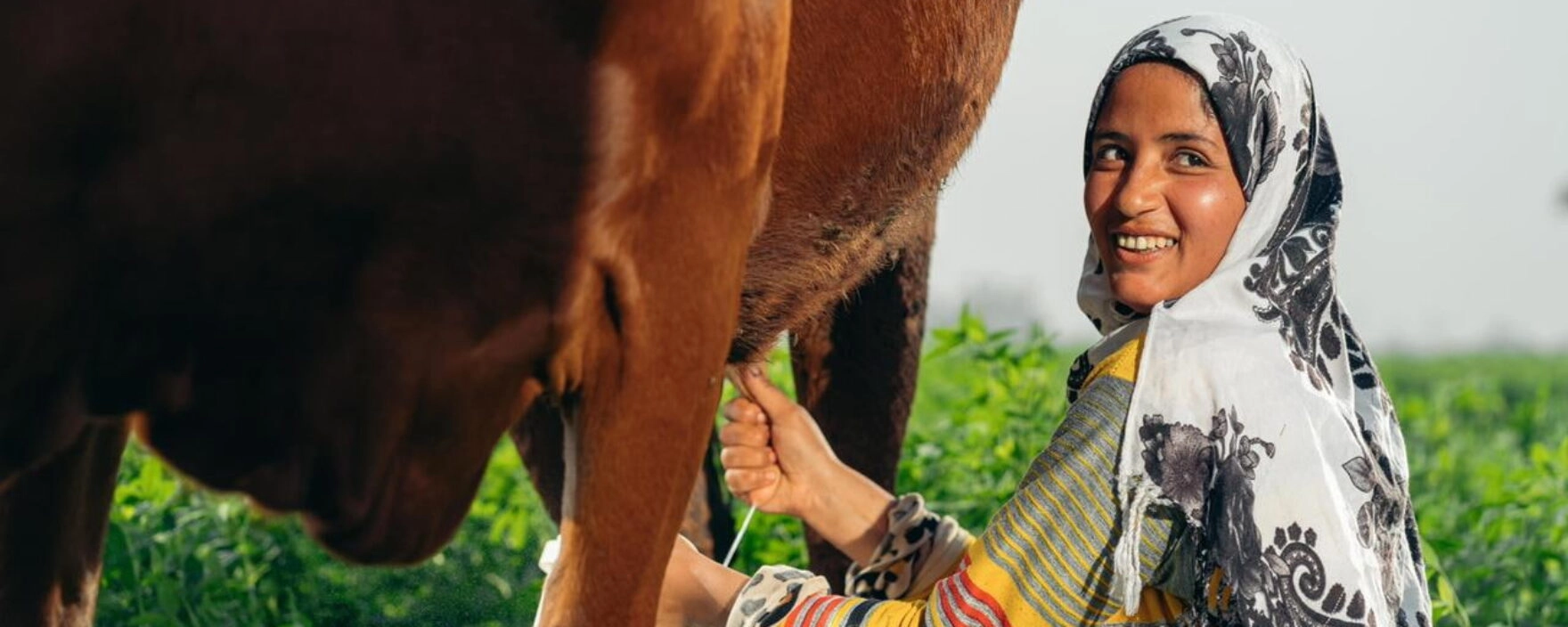
In Egypt, 89% of the 614,000 dairy farmers have fewer than five cows, while supplying around 80% of the country’s milk production.  Yet they remain among the most vulnerable actors in the dairy value chain. Most own just two or three cows and farm less than one hectare of land.

They face a wide range of challenges. Environmental pressures -, such as rising temperatures, water scarcity, and soil degradation -, affect the health of livestock and the availability of quality forage. Poor on-farm water management and rising feed prices further limit productivity and increase costs. These factors contribute to high carbon intensity due to low milk yields.

At the same time, social and economic barriers restrict smallholders’ capacity to improve their livelihoods. Around 30% of the rural population lives below the poverty line. Access to affordable credit, veterinary services, technical training, and reliable markets is limited. Women, who play a central role in dairy farming, face additional barriers — from limited land ownership (only 2% own land) to a heavy burden of unpaid care work.

These challenges reduce farmers’ ability to increase productivity, access higher-value markets, and secure stable incomes.

How does it work?

The Alban Baladna project supports smallholder dairy farmers across the entire value chain, from farm to market, through an integrated and inclusive model.
On-Farm Support
At the farm level, farmers receive comprehensive technical and material assistance aimed at increasing productivity and milk quality. Key services include:
• Training in animal nutrition, welfare, milking techniques, and hygiene
• Veterinary support, including vaccination campaigns and consultations
• Access to resources such as feed, water troughs, and portable milking machines
• Financial support, including advance payments to improve cash flow
• Artificial insemination and genetic improvements
This support helps farmers adopt better farming practices and improve the health and productivity of their livestock.
Post-Production Structuring
To ensure farmers can secure stable incomes and market access, the project also strengthens the post-production ecosystem through:
• Milk collectors, mostly women, who purchase milk directly from farmers and deliver it to collection centers
• Milk collection points and centers with upgraded infrastructure that improves milk quality control, storage, and transportation
• Service hubs offering animal care, feed, financial services, and technical training
By combining production and distribution support, Alban Baladna enables smallholders to access formal markets and significantly reduce milk rejection rates.
Community Leadership and Women’s Empowerment
Women play a central role in the project. A group of women were trained as community leaders, serving as connectors between farmers and the milk collection centers. They are essential to:
• Encouraging formal milk sales within their communities
• Coordinating farmer outreach and service delivery
• Spreading knowledge and best practices
Through this inclusive approach, the project empowers women and supports long-term rural resilience.

Metrics

  • 2,7 M

    in co-funding

  • 750

    tons of milk per month collected (full year around 10,000 tons)

  • 95%

    of the around 8,530 farmers empowered by the project are women

  • 27,700+

    estimated farmers’ family members benefited from increased or secured revenues since the project inception

  • 90% to 6%

    of milk rejected during quality control

Knowledge

  • Regenerative agriculture

    Published on 31/07/2025

    IDF Women in Dairy Report

    Alban Baladna: Empowering Women Dairy Farmers to Enhance Egyptian Food Security and Rural Livelihoods

  • Regenerative agriculture

    Published on 12/02/2026

    Alban Baladna – Infographic

    Empowering Smallholder Dairy Farmers to Improve Rural Livelihoods and Contribute to Egypt Food Security
  • Partners

    • Care Egypt logo - Partner of Danone Ecosystem

      CARE Egypt

    • Danone logo - Partner of Danone Ecosystem

      Danone

    Supported SDGs

    • 1 No poverty

      No poverty

    • 2 Zero hunger

      Zero hunger

    • 5 Gender equality

      Gender equality

    • 8 Decent work and economic growth

      Decent work and economic growth

    • 12 Responsable consumption and production

      Responsible consumption and production

    Project coordinator

    Clémence JOUAN profile picture

    Clémence JOUAN

    Africa Senior Project Coordinator

    Clémence is Africa Senior Project Coordinator at Danone Ecosystem.